
If you have been told you may need a bone graft before a tooth implant, it is natural to have questions. Why is extra bone needed at all? What does the procedure involve, and how does it fit into the bigger picture of replacing a missing tooth? This guide explains bone grafting in plain English, so you can walk into any conversation about implants with a clear understanding of why grafting is sometimes part of the journey.
Why Bone Grafting May Be Required
Jawbone is a use-it-or-lose-it structure. When a tooth is lost, the bone that once anchored it stops receiving the stimulation of normal chewing activity, and over time both the volume and the density of that bone decrease. Bone loss in the jaw has several recognised causes: gum disease, missing teeth, trauma, and prolonged delays in replacing a tooth after it is lost.
This matters for implants because a dental implant needs sufficient bone mass to be placed securely, both while it heals and for its long-term function. When an assessment shows there is not enough bone density at the planned implant site, dentists typically recommend grafting before the implant can be placed. If decayed or failing teeth are part of your story, our guides on what rotten teeth look like and how rotten teeth can be fixed explain how tooth loss often develops in the first place.
What Is Bone Grafting for Dental Implants?
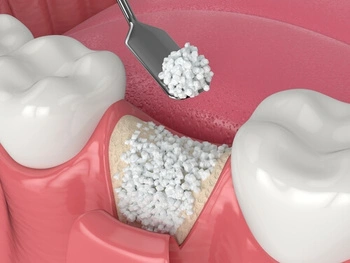
A bone graft is a surgical technique in which bone material is placed into areas of the jawbone where bone has been reduced. The goal is to stimulate the body to form new bone of its own, strong enough to support a dental implant. Over time the graft material integrates as the body builds fresh bone around and through it, creating a stronger foundation that can support an implant during and after implant surgery.
Types of Bone Graft Material
Several sources of graft material are in common use:
- Your own bone, harvested from another area of the body.
- Donor bone material, sourced externally and carefully processed for safety.
- Synthetic bone material, manufactured to mimic natural bone structure.
Each type serves the same essential purpose: it acts as a framework, or scaffold, that encourages new bone growth in the area. The differences are mostly practical. Using a patient's own bone means a second site has to be prepared to harvest it, which is why it tends to be reserved for larger defects. Donor material and synthetic materials avoid that second site altogether, and both are supplied in sterile, processed form so they carry no living cells; they work purely as a structure for the body's own bone to grow into and gradually replace. Some materials are designed to resorb quickly, others to hold their shape for longer, and a protective membrane is often placed over the graft so that the faster-growing gum tissue does not fill the space before the bone can. The clinician providing the treatment recommends the most suitable material based on the patient's oral health, existing bone structure, the size and shape of the defect and overall treatment goals.
Bone Grafting and the Upper Jaw
The upper jaw brings an extra consideration: the sinus cavity sits directly above the back teeth. When bone loss occurs in the upper jaw, it can leave too little bone between the mouth and the sinus for an implant to be placed safely. In these situations a procedure called a sinus lift is required. The sinus membrane is gently raised to create space, and graft material is placed into that space to build bone height. A sinus lift supports implant placement by establishing sufficient bone between the upper jaw and the sinus cavity, and it is most commonly needed for implants replacing the upper back teeth.
The Bone Grafting Process
Grafting follows a fairly consistent pathway wherever it is performed:
- Assessment and planning. An initial consultation includes X-rays or 3D scans to assess bone levels precisely, and a personalised treatment plan is created from those images.
- The procedure. The graft material is positioned in the affected area of the jaw, and the gum tissue is closed over the graft so healing can begin. IV sedation may be used to keep the patient comfortable during the surgical procedure.
- Healing and integration. Healing time varies from person to person, but a graft typically needs several months to integrate fully before an implant can be placed on top of it.
There is no single number that applies to everyone here. A small graft placed into a socket at the time an extraction is carried out may be ready in a matter of months, while a larger reconstruction of a thin or shallow ridge can take considerably longer. General health, smoking, medications affecting bone turnover and the type of material used all influence the pace. Rather than working to a fixed calendar, a dentist or oral surgeon will usually re-scan the site before committing to implant placement, because the scan shows whether the graft has genuinely matured into bone that can hold an implant securely. Following the aftercare instructions during that period, particularly around eating on the site, cleaning gently and avoiding smoking, makes a real difference to how well the graft takes.
Placing Dental Implants After Bone Grafting
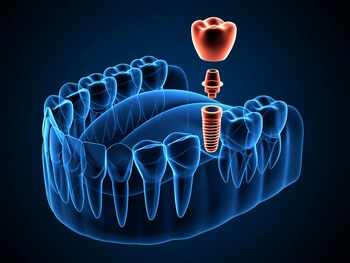
Once sufficient new bone has formed, implant treatment can go ahead. The implant is placed into the jawbone, where it gradually bonds with the surrounding bone in a process called osseointegration. That bond creates the secure base needed to support a replacement tooth. After this healing phase, the replacement tooth is attached to the implant, restoring both function and appearance. You can read a step-by-step walkthrough in our guide to the dental implant procedure.
Benefits of Modern Bone Grafting Techniques
Modern grafting techniques are designed to be predictable and effective, and they have opened the door to implant treatment for many patients who would once have been told their bone loss ruled it out. The key benefits include:
- Making dental implant treatment possible for patients with existing bone loss.
- Improved support for dental implants at the time of placement.
- Better long-term implant stability once treatment is complete.
- A more reliable tooth replacement outcome overall, reducing the need to fall back on removable dentures.
Bone Grafting Compared to Other Treatments
Other tooth replacement methods, such as removable dentures and conventional bridges, restore appearance but do not prevent the ongoing bone loss that follows tooth removal. Grafting, by contrast, actively preserves and rebuilds bone, and the implants it supports function most similarly to natural teeth. Implants anchored in well-grafted bone improve chewing ability, speech clarity and day-to-day confidence in a way that removable options often cannot match. For patients missing many or all of their teeth, full-arch solutions such as All-on-X implants build on the same principle of secure anchorage in healthy bone.
Bringing It All Together
Bone grafting rebuilds the jawbone so that an implant can be placed safely and effectively. It is suited to bone loss caused by gum disease, tooth loss or simply the passage of time, and it creates the stable foundation that long-term implant success depends on. Grafting and sinus lift procedures are performed by dentists and specialists who provide that surgical treatment, and working closely with your clinician and following the treatment plan gives the best chance of a strong, lasting result.
At Footscray Dental Studio on Barkly St, we provide dental implant treatment and offer a complimentary dental implant consultation, including for All-on-X full-arch options. At that consultation we assess your individual situation, including your bone levels, explain whether grafting is likely to be part of your pathway, and discuss the appropriate next steps. Suitability for implants, and for any grafting beforehand, always depends on individual assessment, and results vary from person to person.